
Help / Guide
Magnetic readings
Use a changing magnetic reading as a contextual clue, not identification.
In the app
What it looks like
Magnetic response example Compare a changed response
A raised reading is a clue to look closer, not proof of a tracker.
Screens show example data, and some may differ slightly from the current version of the app.
STEP 1
Establish a baseline
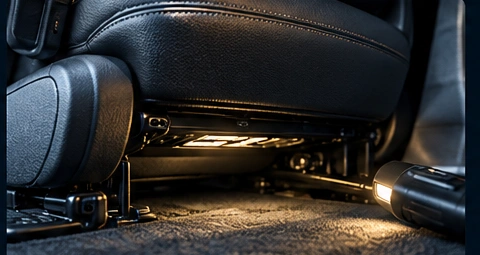
Illustrative photographic example: an accessible under-seat area. Ordinary fittings are not evidence of a tracker.
Read every step
- Establish a baseline
Observe readings away from obvious metal or magnets before comparing nearby areas.
Expected next state: You have an ordinary reference for comparison.
- Consider surrounding interference
Take metal fittings, electronics and phone accessories into account when a reading changes.
Expected next state: You have considered common causes of variation.
- Cross-check safely
Use context and safer visual observations. A magnetic change does not identify a device.
Expected next state: Notes about magnetic changes at accessible exterior areas, with surrounding metal and magnets considered.
- 1
Establish a baseline
Illustrative photographic example: an accessible under-seat area. Ordinary fittings are not evidence of a tracker.
Do this. Observe readings away from obvious metal or magnets before comparing nearby areas.
Then you should have. You have an ordinary reference for comparison.
- 2
Consider surrounding interference
Illustrative photographic example: an accessible under-seat area. Ordinary fittings are not evidence of a tracker.
Do this. Take metal fittings, electronics and phone accessories into account when a reading changes.
Then you should have. You have considered common causes of variation.
- 3
Cross-check safely

Illustrative photographic example: ordinary bedside electronics. Their appearance does not establish what signals they emit.
Do this. Use context and safer visual observations. A magnetic change does not identify a device.
Then you should have. Notes about magnetic changes at accessible exterior areas, with surrounding metal and magnets considered.